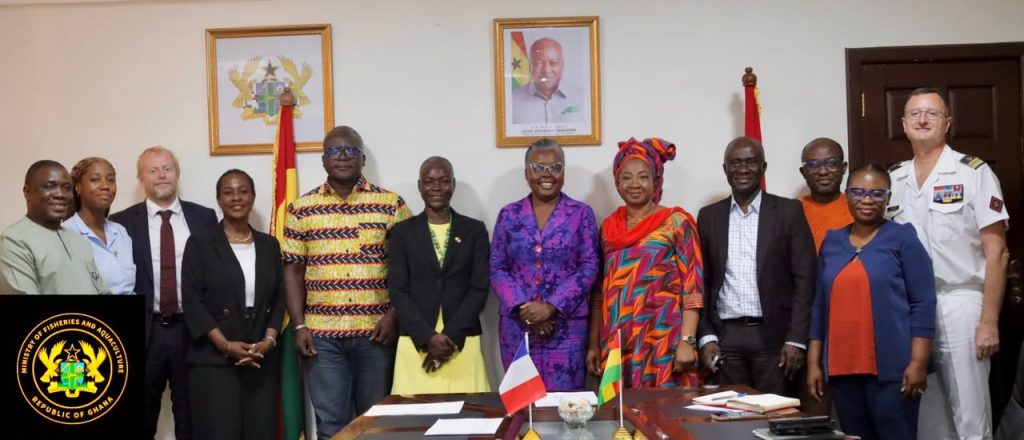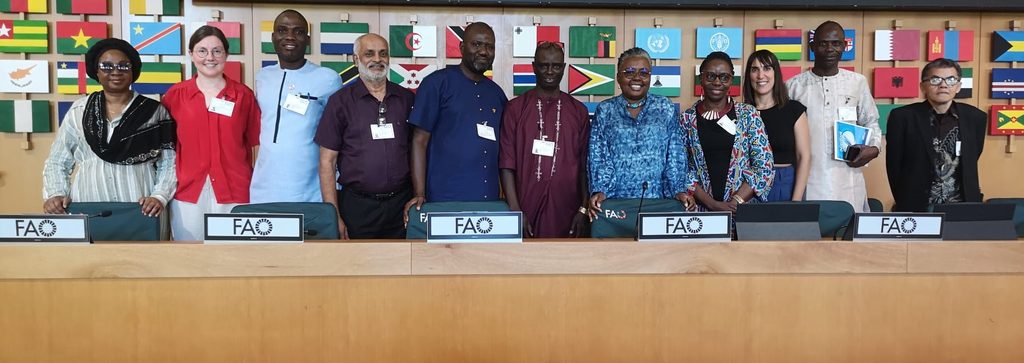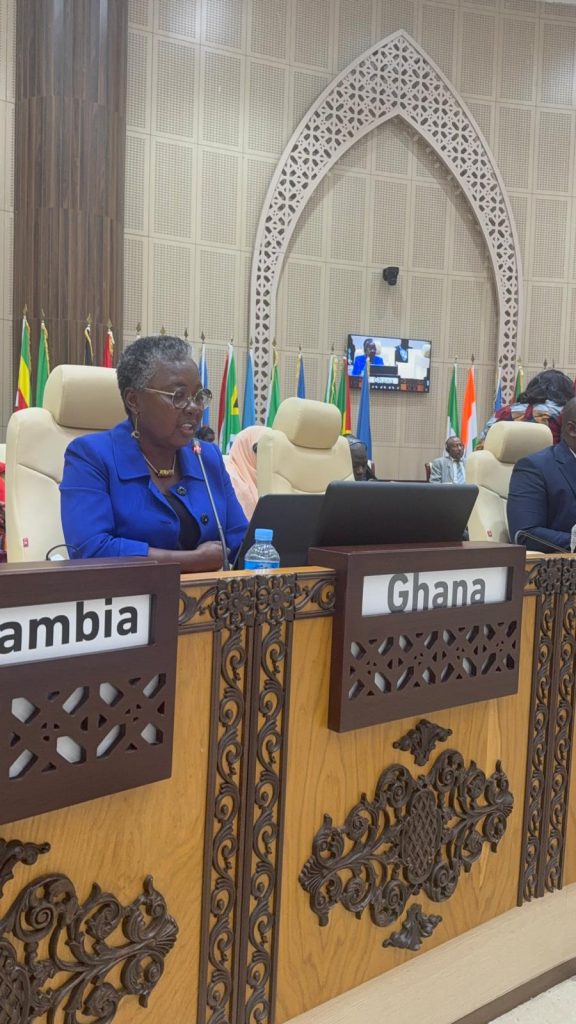
Ghana has highlighted its leadership and practical experience in advancing blue food systems transformation, with the Minister for Fisheries and Aquaculture, Hon. Emelia Arthur, delivering a compelling presentation as a panelist at a high-level international forum in Mauritania.
Speaking on the theme “Ghana’s Lessons in Delivering Blue Transformation,” the Minister outlined key policy, governance, and investment insights shaping the country’s approach to sustainable fisheries and aquaculture development.
Fisheries at the Heart of Food Security
Hon. Arthur underscored the critical role of fisheries in Ghana’s economy and food systems, noting that fish accounts for approximately 60 percent of animal protein intake in the country, with per capita consumption estimated between 22–25 kilograms annually, well above the African average.
“This underscores what is at stake,” she emphasized, pointing to the need for urgent and coordinated action to safeguard the sector.
A Coordinated National Vision
Central to Ghana’s progress, she noted, is an integrated and inter-sectoral approach anchored in a national Blue Economy Strategy with a 10-year implementation plan. The strategy spans marine, inland, and wetland ecosystems and is built on key pillars including economic growth, environmental sustainability, knowledge, equity, and security.
To drive implementation, Ghana is advancing the establishment of a Blue Economy Commission, alongside the development of a comprehensive policy and legal framework.
Strengthening Governance for Sustainability
The Minister highlighted the importance of governance reforms in addressing pressures on fisheries resources. With the artisanal sector contributing over 70 percent of marine fish production, Ghana has introduced measures such as licensing, canoe registration, closed seasons, and strengthened monitoring, control, and surveillance systems.
She also referenced legal reforms under the Fisheries and Aquaculture Act, 2025, as well as the recent declaration of Ghana’s first Marine Protected Area, as critical steps toward restoring fish stocks and ensuring long-term sustainability.
“Without managing access and capacity, sustainability is unattainable,” she noted, while stressing that conservation efforts must be balanced with the livelihoods of the over three million people who depend on the sector.
Driving Innovation Through Partnerships
Hon. Arthur emphasized Ghana’s ecosystem approach, which brings together government, academia, private sector actors, and civil society to co-create solutions and accelerate implementation.
She highlighted the importance of partnerships and innovation, noting that “progress cannot happen in silos,” and that clearly defined public-private collaborations are essential for scaling impact.
Unlocking Value Across the Chain
Beyond production, Ghana is focusing on maximizing value across the fisheries value chain. The Minister noted that post-harvest losses—estimated at 20 to 30 percent in some segments, remain a significant challenge.
Interventions are therefore targeting improved processing infrastructure, reduced waste, enhanced food safety, and expanded market access.
“Blue transformation must extend from water to market,” she stressed.
Scaling Aquaculture for the Future
Aquaculture, she noted, is a key pillar of Ghana’s strategy, currently contributing over 15 percent of national fish production. Efforts are underway to scale community-based systems, promote youth and women participation, and attract private sector investment.
She also revealed that Ghana is advancing processes toward establishing its first mariculture systems, opening new frontiers for sustainable fish production.
“Aquaculture is not just about production—it is about jobs, resilience, and food security,” she stated, while calling for investment in technology, biosecurity, and local feed solutions.
Addressing Investment and Institutional Gaps
Despite progress, the Minister acknowledged that scaling remains a major challenge. She pointed to the need for strong institutions, investment-ready projects, blended financing mechanisms, and strategic partnerships to unlock the full potential of the blue economy.
“Without structured investment, blue transformation will remain an underexploited promise,” she cautioned, adding that a just transition must remain central to ensure inclusive and lasting impact.
A Call for Collective African Action
In closing, Hon. Arthur called for strengthened collaboration across Africa, urging countries to align policies, scale investments, and work together to transform fisheries and aquaculture systems.
“If we act together as a continent, Africa will not only transform its fisheries and aquaculture, we will define the future of sustainable aquatic food systems globally,” she concluded.
Ghana’s participation in the high-level panel reinforces its growing leadership in the global blue economy space and its commitment to driving sustainable, inclusive, and resilient aquatic food systems.