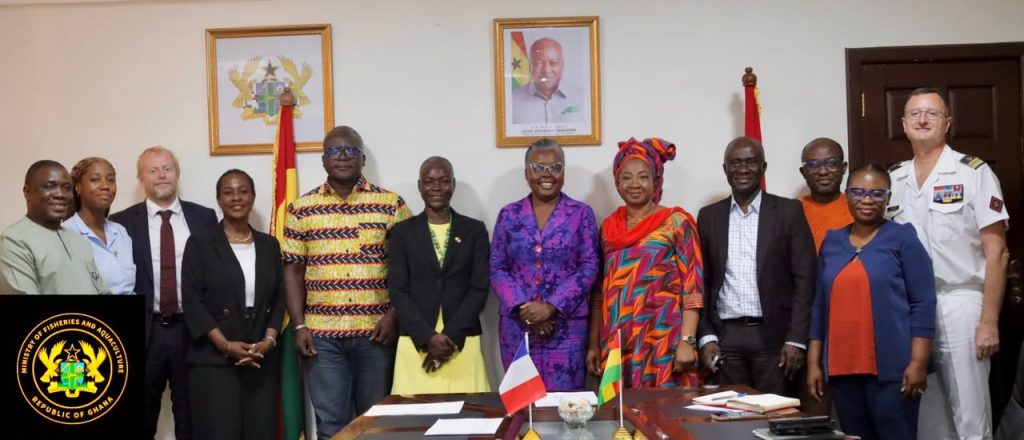
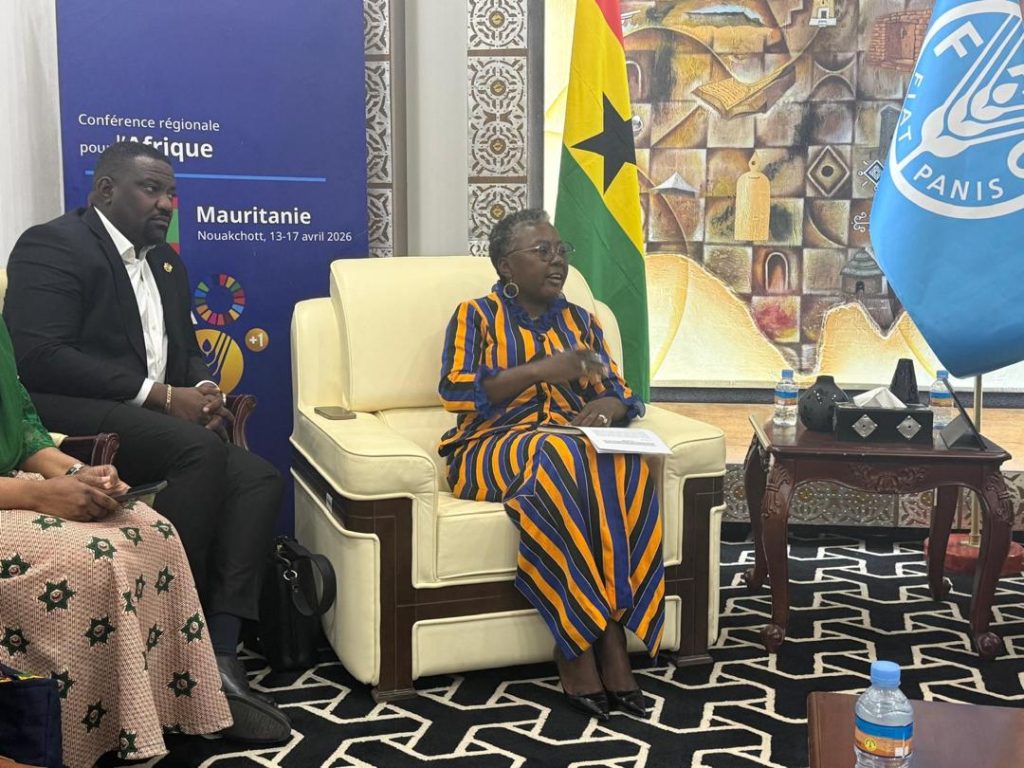
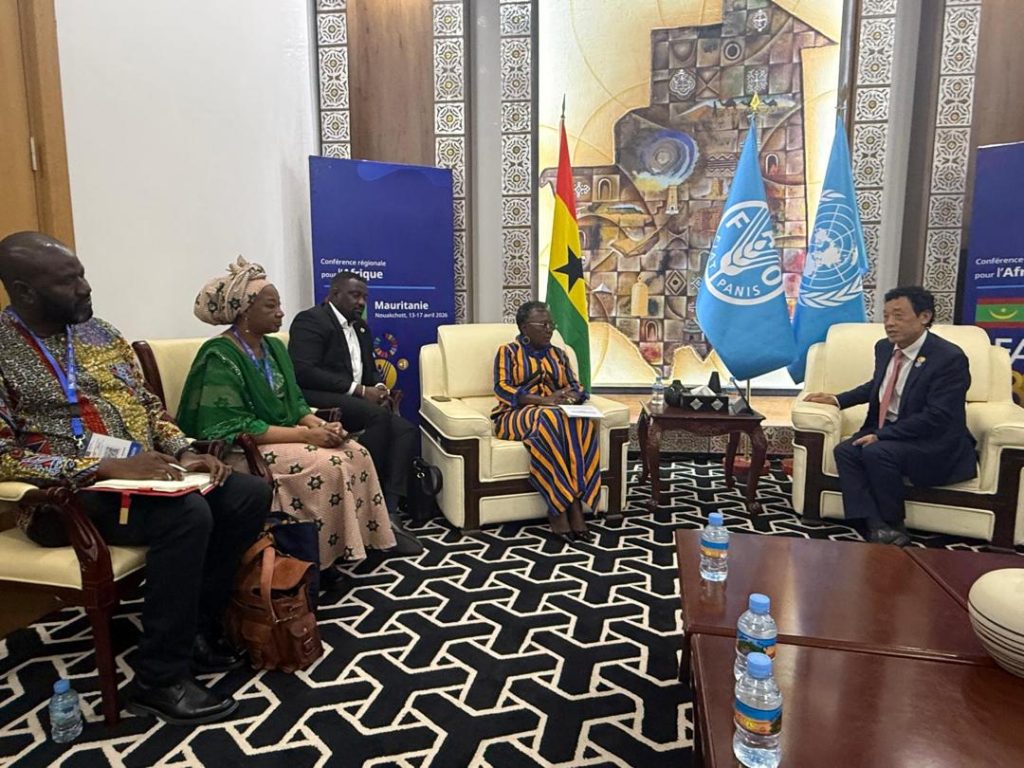
Ghana has reaffirmed its commitment to sustainable fisheries, aquaculture development, and blue economy growth following a high-level bilateral meeting between the Minister for Fisheries and Aquaculture, Hon. Emelia Arthur, and the Director-General of the Food and Agriculture Organization, Qu Dongyu.
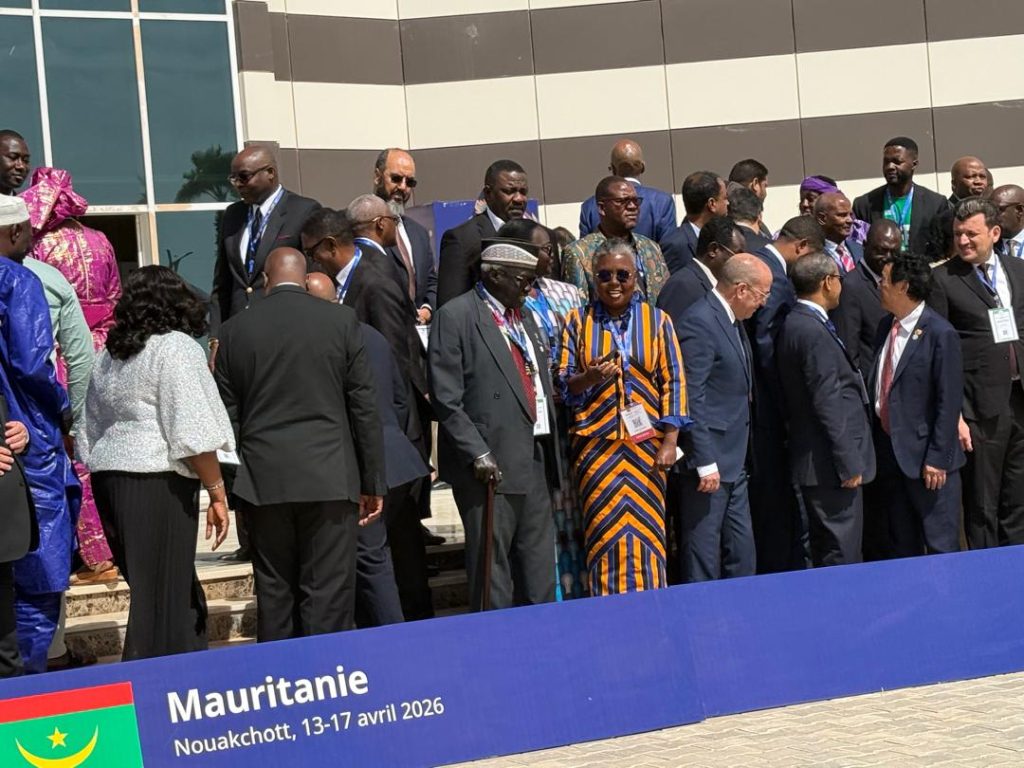
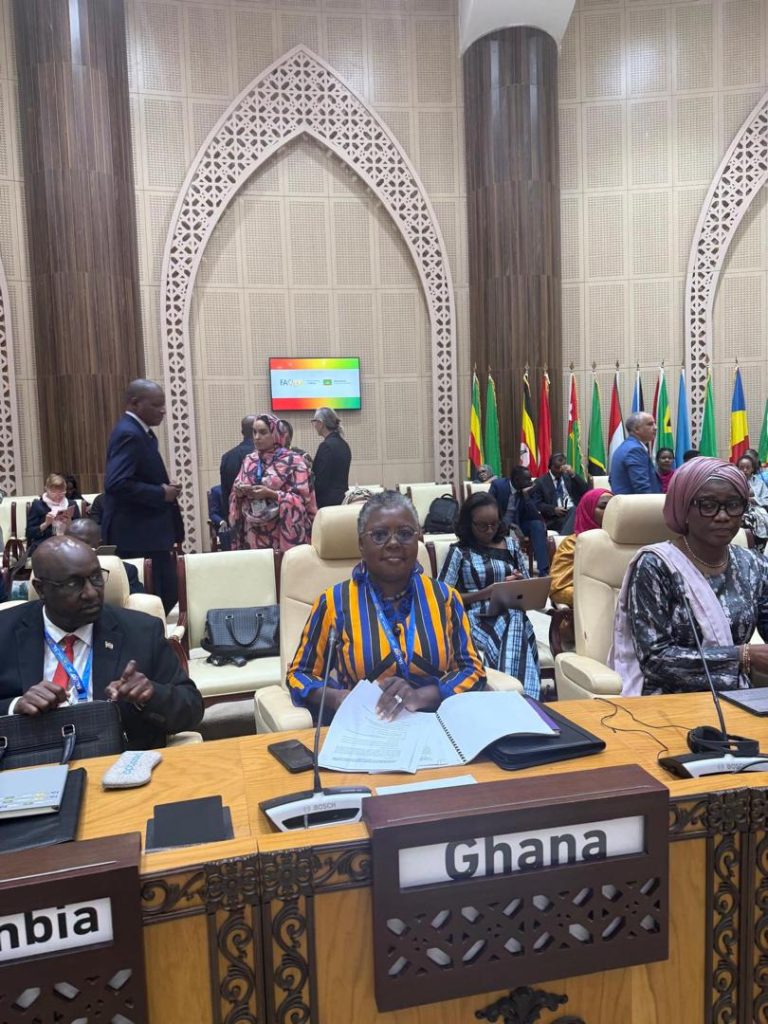
The meeting took place on the sidelines of the 34th Ministerial Conference of the FAO in Nouakchott, bringing together key stakeholders to advance cooperation on agrifood systems transformation and sustainable resource management.
Also present at the conference was the Deputy Minister for the Ministry of Food and Agriculture, Hon. John Dumelo, who joined Ghana’s delegation in advancing the country’s interests in agriculture and fisheries development.
Deepening Ghana–FAO Collaboration
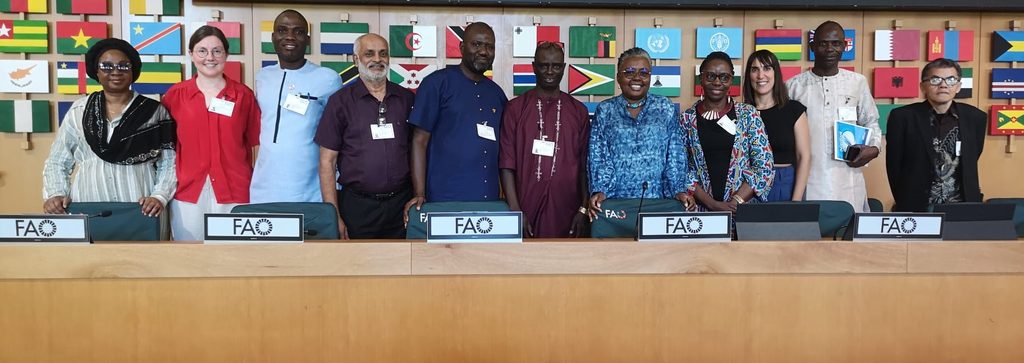
During the engagement, Hon. Emelia Arthur highlighted Ghana’s longstanding partnership with FAO, which has supported critical interventions in fisheries management, aquaculture development, capacity building, and the fight against illegal, unreported, and unregulated (IUU) fishing.
She emphasized that Ghana’s fisheries sector reforms and governance frameworks have significantly benefited from FAO’s technical assistance, particularly in strengthening monitoring, control, and surveillance systems, enhancing transparency, and improving compliance with international standards.
The Minister noted that Ghana remains committed to leveraging this partnership to scale up impact across the sector.
Strategic Priorities and Areas of Focus
Discussions highlighted that Ghana’s national priorities strongly align with FAO’s agrifood systems transformation agenda. Key focus areas identified for enhanced collaboration include:
Aquaculture Development: Promoting private sector participation and investment across the value chain.
Post-Harvest Management: Improving fish processing infrastructure and reducing post-harvest losses to boost value addition and competitiveness.
Fisheries Governance: Strengthening institutions, building capacity for fisheries associations, and enhancing co-management systems.
Research and Data Systems: Advancing stock assessments, updating fisheries statistics, and supporting evidence-based policymaking through improved data systems.
Monitoring, Control and Surveillance (MCS): Deploying modern technologies and reinforcing enforcement mechanisms to combat IUU fishing.
Positioning Ghana as a Blue Economy Leader
Hon. Arthur used the opportunity to position Ghana as a strategic regional leader in the blue economy, noting that while Ghana’s Blue Economy Strategy has already been developed, work is currently underway to finalize the supporting policy and legal framework to guide its implementation.
She stressed that aquaculture remains a national priority to complement capture fisheries, enhance food security, create jobs, and drive economic growth.
“This engagement presents a timely opportunity for Ghana to mobilize targeted technical and financial support, showcase key reforms, and strengthen cooperation frameworks with FAO and other partners,” she stated.
FAO Reaffirms Support
Qu Dongyu reaffirmed FAO’s commitment to supporting Ghana’s fisheries and aquaculture sector, particularly in areas of innovation, sustainability, and resilience.
The Director-General acknowledged Ghana’s progress in fisheries governance and its proactive steps toward sustainable ocean management, expressing readiness to deepen collaboration in priority areas identified during the meeting.
Expected Outcomes
The bilateral engagement is expected to:
Strengthen the Ghana–FAO partnership framework
Secure increased technical and financial support for flagship programmes
Advance sustainable fisheries and aquaculture initiatives
Enhance Ghana’s leadership in the regional blue economy space
Ghana’s participation in the conference underscores its commitment to international cooperation and sustainable development, as it continues to implement transformative policies and programmes aimed at securing the future of its fisheries and aquatic resources.